

How Video Content Builds Brand Trust and Credibility
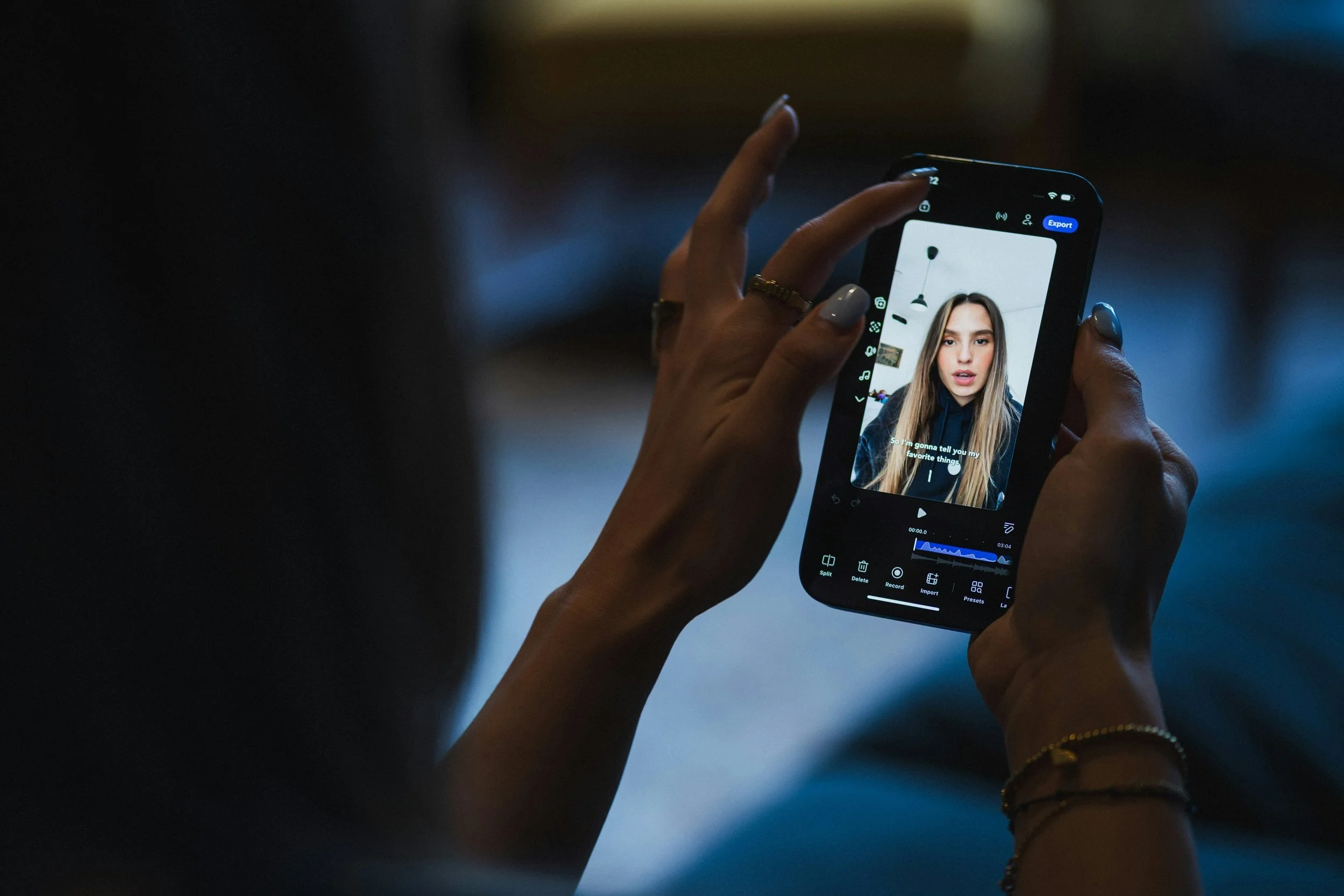
Open any social platform, and you’re bound to see a video almost immediately.
Reels. TikToks. Behind-the-scenes clips. Testimonials. Explainers.
It would be easy to chalk this up to a trend. Or another algorithm shift. Or just one more platform update to keep up with.
But this isn’t a passing phase. It reflects something deeper about how people decide who to trust online.
And the research backs that up. 85% of video marketers say video has helped them generate leads. That does not happen just because a format is popular. It happens because people feel informed, comfortable, and confident enough to take action.
In the current digital environment where audiences are more skeptical than ever, video does something that static content simply can’t: it restores the human signals we rely on to decide who, and what we trust.
Let’s break down how video=trust.
Trust Is Built Through Human Signals
In real life, we don’t build trust by reading bullet points about someone.
We build trust from understanding tone, seeing facial expressions, interpreting body language, and observing this consistency over time
Video brings those cues back into digital spaces.
Research consistently shows that people retain significantly more information when it’s delivered through video compared to text alone. Visual storytelling improves recall and makes messages more memorable. And memorability is a key ingredient in credibility.
When your audience can see your team, hear your voice, and understand your energy, the interaction feels less like a corporate broadcast and more like a conversation.
Trust is rarely built through words alone. It’s built through presence.
Familiarity Creates Credibility
Social media algorithms prioritize video. Platforms push it higher in feeds because it increases watch time and keeps users engaged. That’s why repeated presence is key.
Psychologically, people trust what feels familiar. The more consistently someone sees your brand show up in this visible way, the more comfortable they become. Comfort reduces that growing skepticism. Reduced skepticism increases trust.
Video accelerates that familiarity effect because:
It captures attention more effectively than static posts
It holds attention longer
It’s remembered more clearly days later
Showing up consistently helps your audience recognize you as steady, credible, and dependable.
Transparency Reduces Doubt
One of the biggest barriers to trust online is uncertainty, with leading questions such as:
How does this organization actually work?
Where does the funding go?
Who is behind this brand?
Can I rely on them?
Video gives you a way to answer these questions before they’re even asked. You can do so with behind-the-scenes clips, mission explainers, FAQ-style videos, and more. When people understand how something works, they feel safer engaging with it.
For nonprofits and mission-driven organizations especially, this is critical. Video can show impact in action, introduce the team doing the work, and communicate values in a way that text alone can’t fully capture. In moments of uncertainty, whether that’s a public question, an industry shift, or a broader crisis, visibility becomes even more important.
Engagement Metrics Are Actually Trust Signals
When measuring the performance of video content, we’re looking at these metrics:
Watch time: Signals sustained attention
Shares: Signal endorsement
Saves: Signal perceived value
Comments: Signal active participation
If someone watches your full video, they are investing attention. If they share it, they are attaching their name to it. If they comment, they feel safe interacting publicly.
Those are not surface-level metrics. Those are early-stage trust indicators.
A Quick Reality Check on Video Content
There’s a common misconception that video requires studio lighting and professional editing. Video content doesn’t need to be perfect; in fact, overly polished content can sometimes create distance. Audiences today are increasingly drawn to content that feels real, not rehearsed. The more authentic and down-to-earth your video content is, the better the chance at building those trusting connections.
If video has been sitting on your content wish list for months, this is your sign to stop overcomplicating it. Creating video content is far more approachable than most teams think! The barrier usually isn’t skill. It’s momentum.
You do not need a studio. You do not need high-end cameras. You do not need a full production crew.
Here is what you actually need to get started:
A smartphone with a solid camera.
Natural light from a window or a basic ring light.
A quiet space where you can focus for a few minutes.
One clear idea you want your audience to walk away with.
With a few quick updates to your phone’s camera settings, you can also significantly improve video quality without investing in expensive equipment. If you’re unsure where to start, check out these guides for optimizing your iPhone or Android video settings.
Strong video content works because it feels direct and human. Your audience is not grading your lighting setup. They’re paying attention to whether you are helpful, clear, and relevant to what they care about.
Strong video content works because it feels direct and human. Your audience is not grading your lighting setup. They’re paying attention to whether you are helpful, clear, and relevant to what they care about.
So, start small. Record a short answer to a question you hear all the time. Share a quick perspective on an industry trend. Highlight a resource your team just published and explain how it’s useful.
You do not need to go viral. You just need to show up consistently enough that your audience begins to recognize your voice and trust it.
The Bigger Picture Behind the Video Push
Nearly every major platform has shifted to prioritize video. Businesses across industries are investing in it. And visual content continues to outperform static formats in recall, retention, and engagement.
But the takeaway isn’t “post more videos because everyone else is.” The takeaway is this: If trust is your differentiator, video is one of the clearest ways to demonstrate it.
When people can see you, hear you, and observe your consistency over time, your brand stops feeling abstract. It starts feeling real. And in a crowded, skeptical digital landscape, that reality is what builds credibility.
If you want stronger engagement, create video content.